| URL |
https://mokkanko.nabunken.go.jp/en/5AKAHQ28000031 |
| Tablet Number |
31 |
| Text |
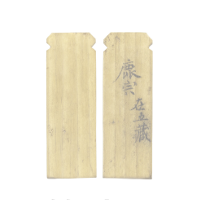
□椋椋屋屋□ |
| Wooden Tablet Size (mm) |
Length |
(72) |
| Width |
(15) |
| Thickness |
5 |
| Type No |
081
|
| Bibliographic Reference(s) |
飛鳥藤原京1-31( 飛14-13下(79)) 飛14-13下(79)) |
| Notes on Characters |
最後の文字は「屋」の可能あり。 |
| Shape and Condition |
上欠(折れ)、下欠(折れ)、左やや割れ、右やや割れ。 |
| Tree Species |
ヒノキ科# |
| Grain Direction |
板目 |
| Site Name |
飛鳥池遺跡南地区
Asukaike Site (Southern Sector)
|
| Location |
奈良県高市郡明日香村大字飛鳥 |
| Investigating party |
奈良国立文化財研究所飛鳥藤原宮跡発掘調査部
Department of Asuka and Fujiwara Palace Sites Investigations, Nara National Research Institute for Cultural Properties
|
| Excavation No. |
飛鳥藤原第93次
|
| Feature No. |
SX1220炭層1
|
| Excavation precinct |
5AKAHQ28
|
| Tablet Type |
習書
|
| Ancient Province |
|
| Personal Name |
|
| Japanese Era Name |
|
| Date |
|
| Feature Chronology |
650-700 |
| Notes on the Tablet |
上下両端折れ、左右両辺やや割れ。収納施設に関わる「椋」「屋」の字を繰り返す。最下字も横画がみえるにすぎないが、「屋」の可能性がある。「椋」「屋」が列挙されたものとしては、伊場遺跡出土のいわゆる「屋椋木簡」が著名である(浜松市郷土博物館編『伊場木簡』浜松市教育委員会、一九七六年、二一号)。クラを意味する「椋」は、朝鮮半島に由来する文字で、八世紀には新たに「倉」「庫」「蔵」などの語が一般的となる。「屋」は八世紀以後にも用いられ、土間ないし低床構造の物資収納施設を指す。 |
| DOI |
http://doi.org/10.24484/mokkanko.5AKAHQ28000031
|
| Related Link(s) |
|
| Image Use Conditions |
調査主体が奈良文化財研究所(奈良国立文化財研究所含む)であれば、どなたでも複製、公衆送信、翻訳・変形等の翻案等、自由に利用できます。商用利用も可能です。申請不要です。詳細は利用条件をご確認ください。高解像度画像がColbaseに掲載されている場合がありますので、Colbase(https://colbase.nich.go.jp/?locale=ja)でもご確認ください。 |